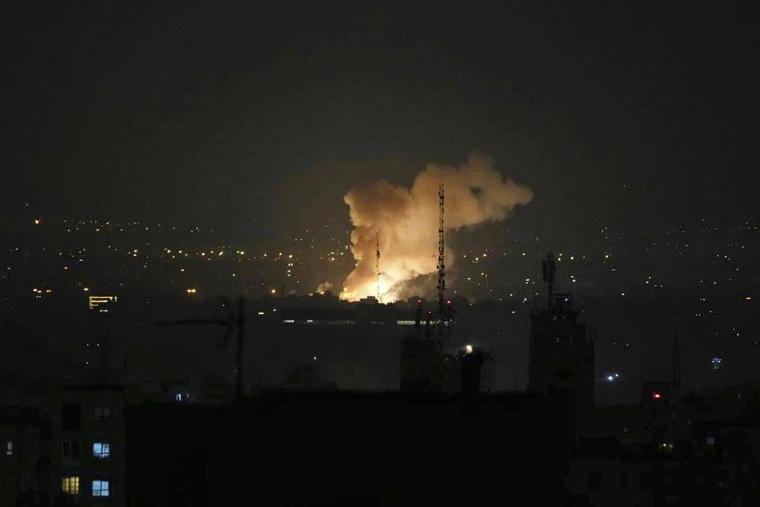
Israel has intensified its military campaign against Iran, focusing on nuclear and missile-production facilities, as diplomatic efforts falter and Iran retaliates with missile and drone strikes on major Israeli cities.
Israeli Offensives on Nuclear Sites
On June 21, the Israeli Air Force executed a precision strike on Iran’s Isfahan nuclear complex, deploying over 50 warplanes targeting centrifuge facilities—while Fordow’s underground site remained undamaged due to its reinforced structure. Israeli military intelligence asserts the operation eliminated key Quds Force commanders, delivering a significant blow to Iran’s enrichment capabilities.
Iranian Retaliation and Civilian Impact
Iran launched a missile and drone barrage aimed at Israeli heartlands, triggering air-raid alarms in Tel Aviv, Haifa, and Beersheba. Although most threats were intercepted, a Sejjil missile struck Soroka Medical Center in Beersheba, destroying wards and injuring nearly 50 people. Iranian statements claim they intended a nearby military target, but Israel classifies the attack as an act of terrorism.
U.S. and Global Diplomatic Posture
U.S. President Donald Trump has confirmed bold American strikes on Iran’s Fordow, Natanz, and Esfahan nuclear sites, and is considering further military action contingent on diplomatic leverage over the next two weeks. Iran has warned that U.S. intervention would spark widespread conflict.
Europe has backed Geneva-based talks, yet Iran remains steadfast, indicating it will not engage while under attack. The IAEA and UN have expressed grave concern over potential radiological and humanitarian crises.
Civilian and Regional Consequences
In Tehran, widespread panic has spurred significant internal displacement, with thousands fleeing to northern provinces. In Israel, at least 24 civilians are confirmed dead, with over 600 injured, including damage to residential and hospital infrastructure.
Outlook
With both nuclear capabilities and missile arsenals under fire, the conflict threatens to engulf the region in broader violence. The fragile two-week window for diplomatic resolution remains open, but international observers fear rising civilian casualties and a deepening strategic standoff.